


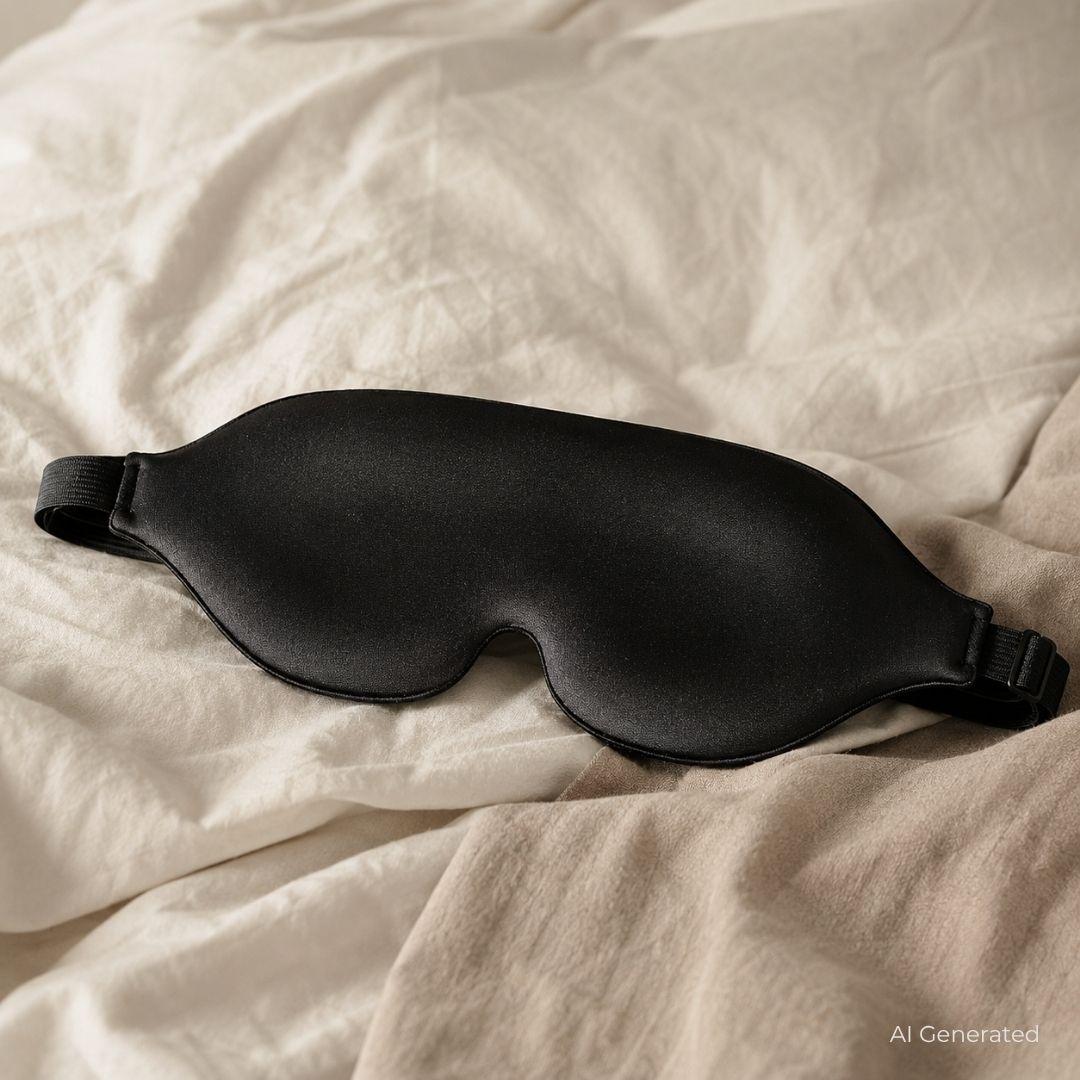
Darkness made practical.
A contoured, adjustable mask helps reduce light at the eyes when complete room darkness is difficult to create.
How much light is still reaching your eyes at night?

Keep darkness personal.
Reduce light at the eyes when a partner needs the room illuminated.

Darkness beyond home.
Reduce unwanted light during flights, hotel stays, and shared travel environments.

More darkness at eye level.
When permitted by the care team, a sleep mask can reduce ambient light during hospital rest periods.
Two ways to reduce nighttime light.
A sleep mask, room-level control, or a combination of both.
Both approaches are valid, and some people may prefer to use them together.
Frequently Asked Questions
Can light at night affect sleep quality?
Yes. Light reaching the eyes at night can affect sleep by influencing circadian timing, melatonin, and alertness. The response varies with light intensity, colour, timing, duration, and individual sensitivity.
An international expert consensus published in PLOS Biology recommends making the sleep environment as dark as possible, with no more than 1 lux melanopic EDI at the eye during sleep. Melanopic EDI estimates how strongly light stimulates the eye’s melanopsin-sensitive system and is not the same as ordinary lux.
You can reduce nighttime light at the room level with blackout window coverings, reduced door-gap light, and safely switched-off or covered nonessential displays—or at the eye level with a well-fitted sleep mask. This mask is designed for strong light reduction, but fit and remaining light leakage vary, so total blackout is not guaranteed.
Will this sleep mask block all light?
The mask is designed for strong light reduction, not guaranteed total blackout. Its lighter-contact nose design improves comfort but may allow a small amount of light near the nose, depending on face shape, strap adjustment, sleeping position, and room brightness. Repositioning the mask can improve the seal, but it should not be overtightened to eliminate every trace of light.
How is a contoured sleep mask different from a flat sleep mask?
A flat mask usually rests closer to the eyelids, while this mask uses raised eye cups to create more space around the eyes. The contoured design may feel more comfortable for people who dislike direct eyelid contact. Fit remains personal, and the best option depends on face shape, sleeping position, and individual comfort.
Will the mask press on my eyelids or eyelashes?
The raised eye cups are designed to reduce direct eyelid and eyelash contact. Some contact may still occur depending on facial features, eyelash length, movement, and how the strap is adjusted. The mask should feel secure without pressing tightly against the eyes.
Can I use this mask if I sleep on my side?
Yes, it can be worn while side sleeping, but comfort varies with pillow firmness, head position, face shape, and strap tension. If an edge or the strap feels noticeable, loosen or reposition the mask. Stop using it if it causes persistent pressure, irritation, or discomfort.
How do I adjust the mask for the best fit?
Centre the contoured eye cups over your eyes, then adjust the strap until the mask feels snug and secure—not tight. If light enters near the nose, gently shift the mask or strap. A comfortable fit is more important than forcing a complete seal.
Can I use the mask for travel, naps, or a shared room?
Yes. The mask is a portable way to reduce visual stimulation when curtains, room lighting, or another person’s schedule are outside your control. It can be used for nighttime sleep, naps, or travel whenever it feels comfortable.
How should I clean and store the sleep mask?
Gently hand-wash the mask and hang it to air-dry completely before using or storing it. Do not machine-wash, tumble-dry, bleach, iron, or use harsh cleaners unless the care label specifically confirms that method is safe. Store the clean, dry mask where it will not be compressed or damaged.
Can I return the sleep mask?
Unused, unopened masks may be returned within 30 days, subject to the Natural Health Solutions Refund Policy. Review the current policy before returning an item, or contact support if you are unsure whether your order qualifies.